
Build Less, Discover More: Smarter World-Building for Writers
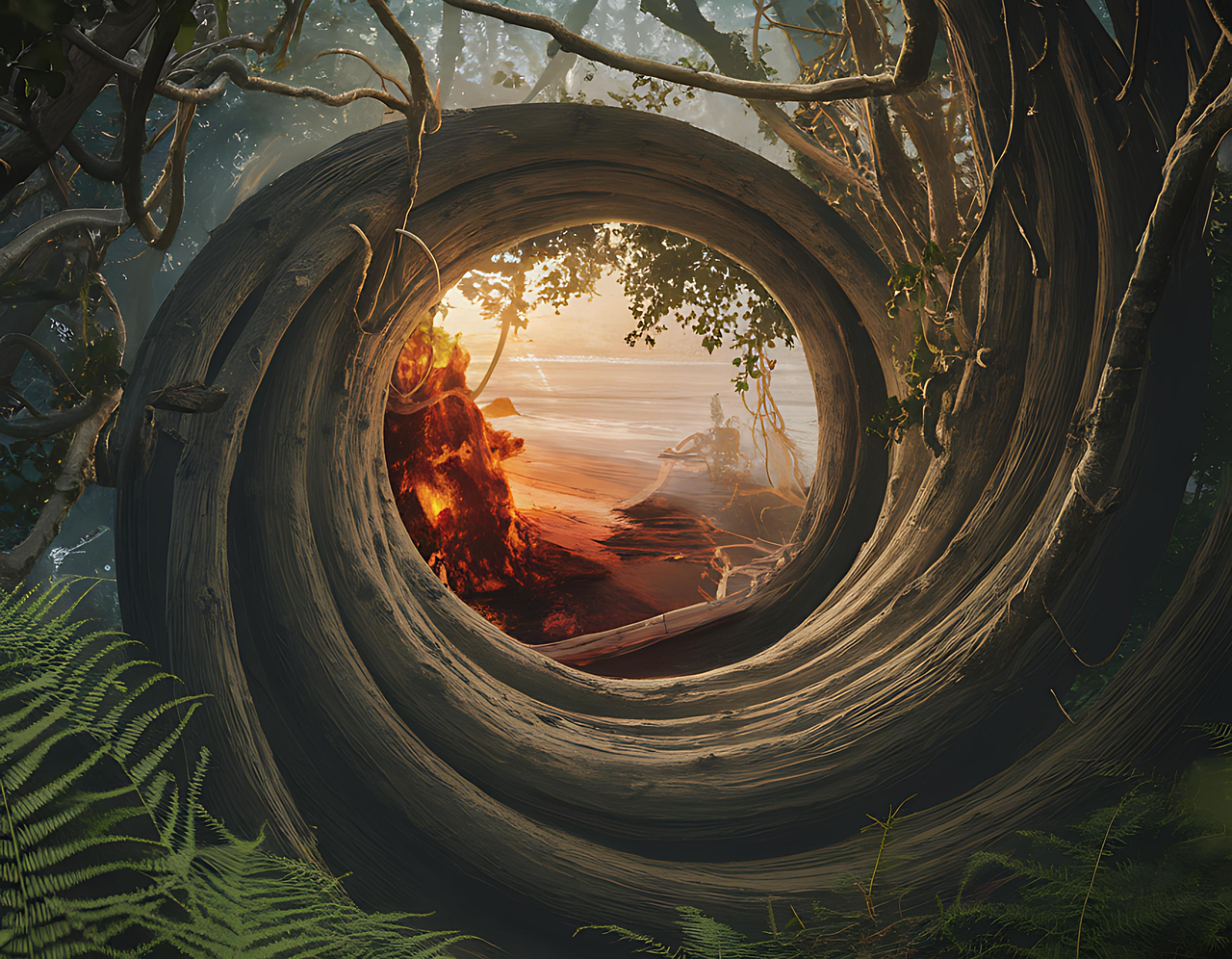
It’s no surprise that most fantasy and science fiction writers love world-building. Who wouldn’t want to spend hours dreaming about the histories of fantasy kingdoms or galactic empires?
But if your Scrivener notes are overflowing with details about your magic system or maps of space trade routes, and you haven’t written past chapter three, you may have a problem.
Let’s take a look at some ways to integrate world-building into your novels naturally while leaving room for discovery, rather than locking yourself into rigid frameworks or indulging in encyclopedic exposition.
1. Start With Story, Not Setting
It can be tempting to build a world you love, plop your characters into it, and watch them play. But if your setting doesn’t serve your story’s emotional and thematic core, you’ll end up boxing yourself into a corner and confusing your readers.
For example, George R.R. Martin’s world of Westeros is brutal and grim, reflecting the complex plots of political scheming and betrayal in his A Song of Ice and Fire series. By contrast, J.R.R. Tolkien’s Middle-earth is lush and dotted with beautiful ruins and cities, highlighting the themes of friendship, hope, and perseverance.
2. Let Characters Reveal the World
Every writer I know struggles with integrating backstory into their novels without creating page-long info dumps. The same problem can apply to world-building.
The easiest solution is to reveal details of your world through the actions of your characters. As they move through your story, pull the curtain back on parts of your setting only when they encounter them.
In the original Star Wars movie, Obi-Wan tells Luke about the Force and the Jedi only briefly and in the context of what Luke is encountering — the first time when he holds his father’s lightsaber and the second when he’s training with it. No lengthy history about the Jedi, the different types of lightsabers, or how they’re made.
In short, think about “function over facts.” Readers don’t need to know everything, just what matters in the moment.
3. Avoid the ‘Museum Tour’ Effect
Many books (and movies) made the mistake of pausing the story to show off the amazing world they created. In movies, this is often done with impossible camera angles sweeping over parts of the landscape. In your book, this can be whole paragraphs that look like they’d belong in a Wikipedia entry.
Again, only reveal details about it that are relevant to the actions of your characters. Harry Potter is never given a comprehensive map or lecture on all of the features of Hogwarts or the wizarding world. He simply discovers them bit by bit as he gets drawn into the conflicts all across the fantastical setting.
4. Build Just Enough to Begin
It’s okay if you don’t know every town, mountain pass, and forest in your world. You only need to build what the story immediately needs.
Like Netflix and housecleaning, world-building can quickly become a way to procrastinate from writing your story. You don’t need to know the weather in this region of the world for the next week or the history of every kingdom that once ruled it to write your scene.
Margaret Weiss, co-author of the Dragonlance series, took this advice to heart, often setting aside the details about the world her collaborator, Tracy Hickman, spent so much time crafting.
“Tracy is the keeper of the moons,” Weiss revealed in an interview. “I just make them full when I need them.”
5. Let Your World Evolve Organically
Another issue with overly detailed world-building is that it can trap you within your own rules, leaving little room for discovery — one of the most joyful experiences of writing.
During your early drafts, you should feel free to retcon any details of your world that don’t serve your story. If you’ve discovered an exciting new character arc for your wizard, but your magic system doesn’t allow for it, change it to fit the story you want to write. No one will ever know.
If you’re worried about keeping track of these changing details or staying consistent with your world-building, create a “living world doc” that evolves with the manuscript. You don’t need to chart the cycles of your world’s moons, but you should at least know how many there are.
6. Trust Your Reader
While fan-fiction and expanded universes are all the rage these days, most readers don’t want or need to know every detail about your world. A little mystery can actually make them feel more immersed in your story as they fill in the blanks with their imagination.
Think about the slight disappointment you feel when watching a movie adaptation of a favourite book. Isn’t there a twinge of letdown when the actor cast as the main character doesn’t match the one in your head, or when an iconic location doesn’t look quite right?
That doesn’t mean you should ignore parts of your world that you haven’t developed in detail. You can leave tantalizing hints that spark curiosity, but that aren’t essential to your story.
Take this passage from The Fellowship of the Ring, when the company comes upon the ruins of Weathertop:
This was once the great watch-tower of Amon Sûl,” said Aragorn. “The greater part of it must have fallen in some fierce battle long ago. … It is told that Elendil stood here watching for the coming of Gil-galad out of the West, in the days of the Last Alliance.
As readers, we’d love to know more about Amon Sûl, Elendil, Gil-galad, and the Last Alliance. But not having them explained to us piques our curiosity and makes the world feel more real as we imagine what they could be.
Questions to Ask Yourself as You Write
If you’re feeling stuck or confused about whether your world-building is distracting you or serving your story, pause and consider these questions:
Is this detail essential to the plot or character motivation?
Can I show this through behaviour or conflict rather than exposition
Does this world element create opportunities for tension or theme?
Have I written myself into a corner with my own “rules”?
Conclusion
World-building should feel effortless, not exhaustive — a process of discovery rather than a precise blueprint you need to follow.
By developing your setting alongside your story, adapting it to your themes and characters as needed, you’ll create a richer experience for both you and your readers. Save the Wikipedia entry for someone else to write.
This article originally appeared on Medium.
